Writing · essay
Designing the first hour after a lead comes in
A new lead is paying attention right now. How I design the acknowledgment, the routing, the nudges and the follow-ups so a new lead always has an owner.
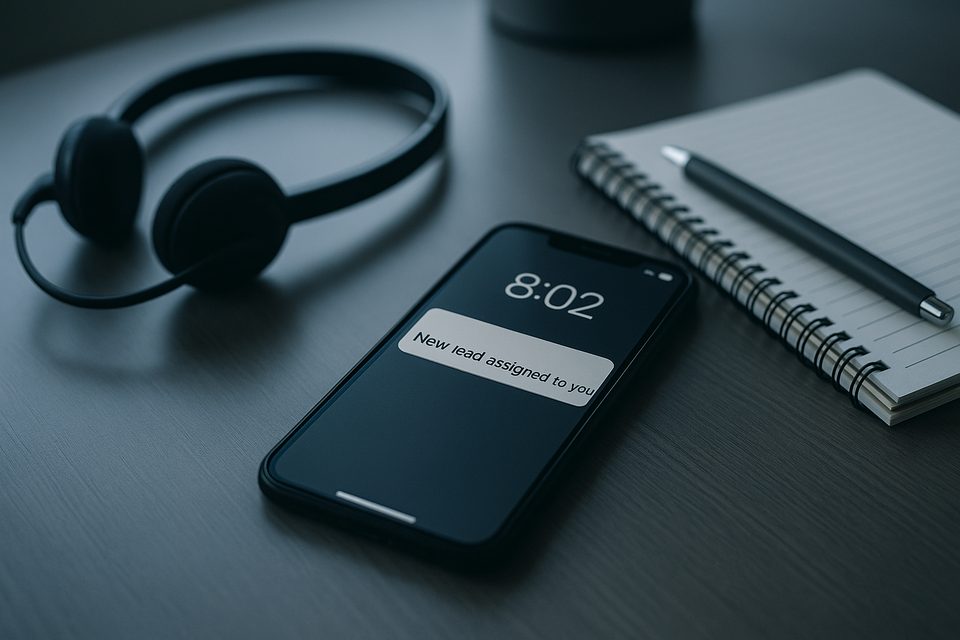
When I design lead follow-up automation for a business, I spend as much time on the first hour after the form as I do on the form itself.
The form gets all the attention in most website projects. It's visible, it's easy to review and everybody has an opinion about it. What happens after someone presses submit is usually left to whoever set up the notification email. That's the part I care about most, because that's when the person decides whether to keep talking to you.
Why the first hour matters
Someone who just reached out is paying attention right now. They were thinking about their problem a few minutes ago, and they may have contacted two or three businesses in the same sitting. If your reply comes tomorrow, you're often not the first conversation they have, and sometimes you're not in the running at all.
In that first hour I want the person to know their message landed and what happens next, and then to hear from a real person as soon as you can manage it.
The acknowledgment
The first thing I build is an immediate reply, by email, and by text when they've agreed to be texted. It should read like a person wrote it. It says you got their message, what happens next and roughly when, and who they'll hear from. I covered the confirmation page itself in your form is a conversion system, so here I'll stay on what comes after it.
It shouldn't pretend to be a personal reply if it isn't one. It just shouldn't sound like a machine either. A short, warm, specific message does more than a long one full of links.
Routing to a person
Next, the lead goes to a named person instead of a shared inbox. Shared inboxes are where everybody assumes somebody else has it.
The routing can start simple, like by service or by who's working that day. I just want anyone to be able to say whose lead it is at any moment.
Nudges and escalation
People get busy, so the system should notice when a lead is waiting. If nobody has reached out after a set amount of time, the owner gets a reminder. If it sits longer than that, a manager hears about it.
The timings depend on the business, and I think a manager should set them. Once they're written down, a lead can't sit untouched without somebody finding out.
Follow-ups that know when to stop
Not everyone answers the first call. So if the first attempt doesn't connect, follow-ups go out on a schedule over the next few days, by email and by text for people who agreed to it. Each one is short and gives an easy way to respond or book a time.
The most important rule is that the sequence stops the moment the person replies, books or tells you they're not interested. A reminder that shows up after they've already talked to you makes the whole business look like it isn't paying attention.
An off switch for every sender
Every automated message gets its own off switch, so one sender can be paused without touching the rest. I went into why in your database is the source of truth.
Measure it by source
Once this is running, track how fast each lead gets a first real response and how many turn into customers, and break both down by where the lead came from. Response time is one of the few things in the whole funnel a business fully controls, and it connects straight to what each customer actually costs.
Most of this is a handful of decisions about ownership and timing. I'd rather a leader make them on purpose than leave a new lead waiting until somebody happens to check.